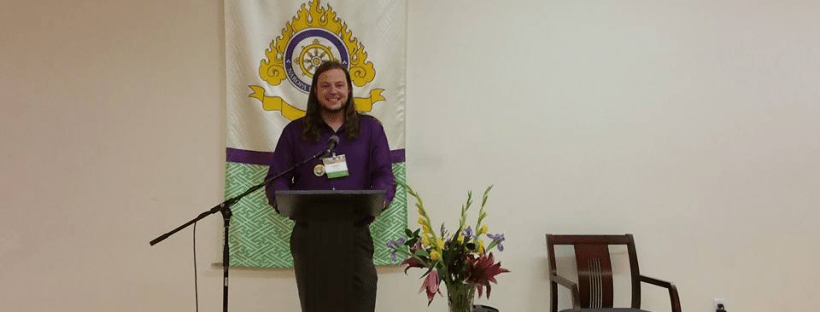
Shortening the Distance Between Inspiration and Execution
Every counselor, social worker, or psychologist has imagined offering a workshop. Maybe it arose in a session, when a client’s struggle revealed a pattern you knew many others carried. Maybe it came driving home, the idea of a grief support circle tugging at you, or a weekend training on self-care whispering through your own exhaustion. Perhaps it sparked during someone else’s workshop—another person’s ideas synergized with your own. Wherever it starts, the work is to channel that energy into service.
The ideas arrive easily. The execution is where many of us stumble. I often feel like summer lightning—endless brainstorming, flashing brilliance, then dispersal. My historic struggle has been introjects and doubt. And yet we persevere. I have over 1,000 teaching hours—from five-minute segments to back-to-back eight-hour trainings—and I want to share lessons learned. I invite you to join me.
This September, the Contemplative Mental Health Leadership Group is taking on that challenge directly. With guest Mike Lyons — SCORE Co-Chair for Workshops and Public Events joining us on September 11, 2025 we’re dedicating two sessions this month to the art and practice of building workshops and events that actually work.

In clinical practice, we’re trained for one-on-one work or small therapy groups. Workshops demand a different lens—logistics, marketing, budget, and compliance. They ask us to imagine not just a client but a room of people with varied needs and expectations. That leap can feel daunting—yet hundreds of workshops run in every major city each year. Why do people go? Why have you gone? Begin there.
Too often, the workshop lives in a notebook—half-finished outlines in folders or fragments of conversations that never materialize. I judged myself harshly for the first four years. It took four years before I felt comfortable presenting my concept in group supervision; another year before my first test run. Six years later, Brush With Grief is clearly defined, profitable, and deeply impactful. In this blog, I unpack that process so you can design your own.
This blog is both teaser and roadmap. My goal is to move you from idea to reality—whether that’s a mindfulness skills group, a caregiver education series, or a professional training with CEUs. Whatever you build, prioritize clarity, structure, and sustainability.
By the end, you’ll understand how to design a workshop and treat it as part of your independent practice model—a hybrid of clinical intervention, community education, and business strategy. You’ve got this.
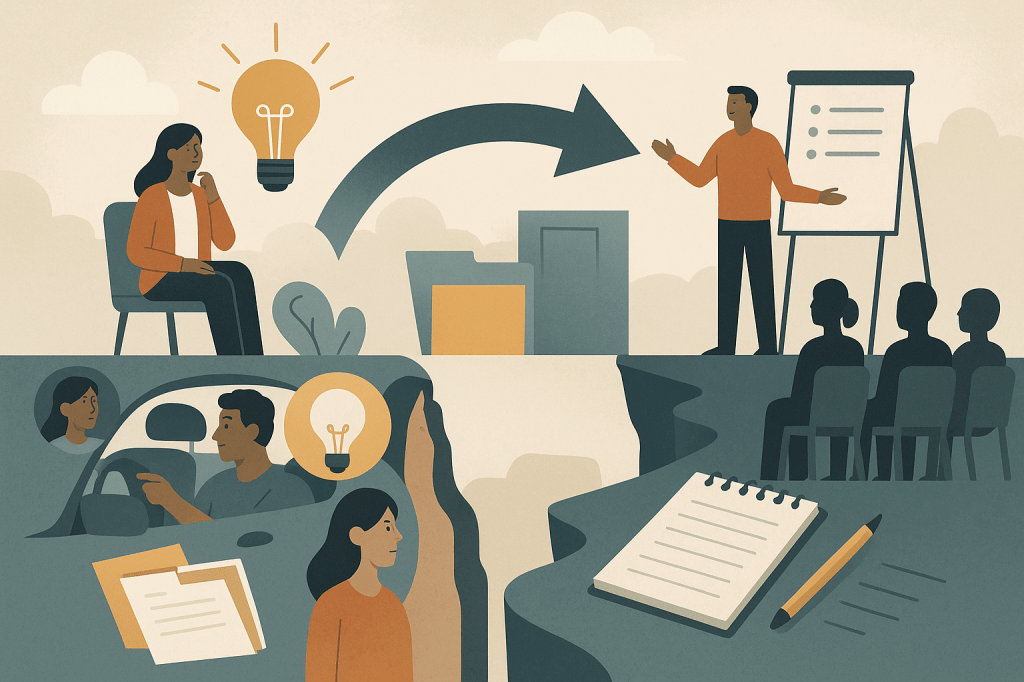
Why Workshops Fail — and What Counselors, Coaches, and Psychologists Can Do To Succeed
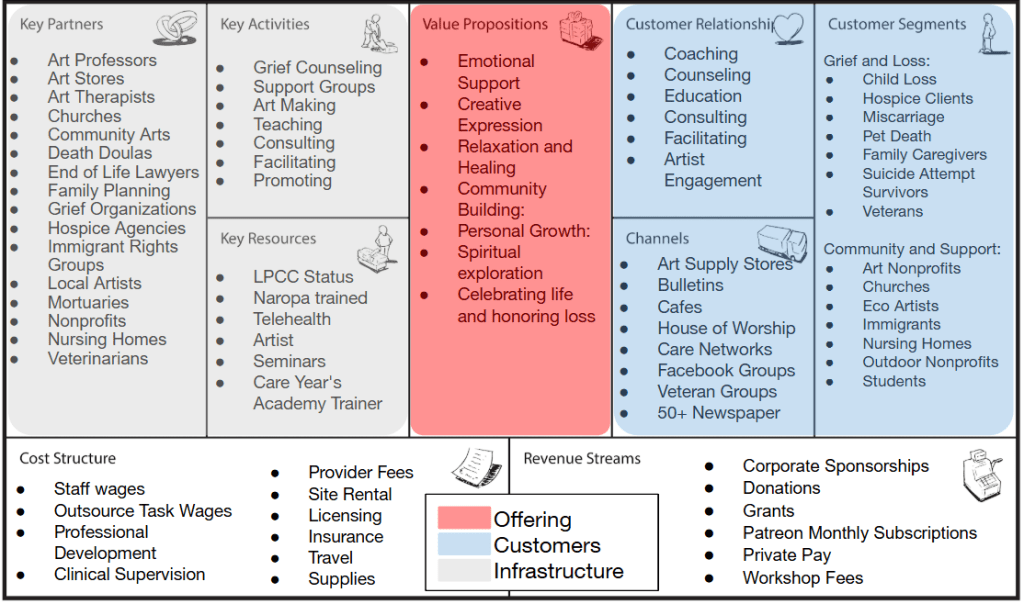
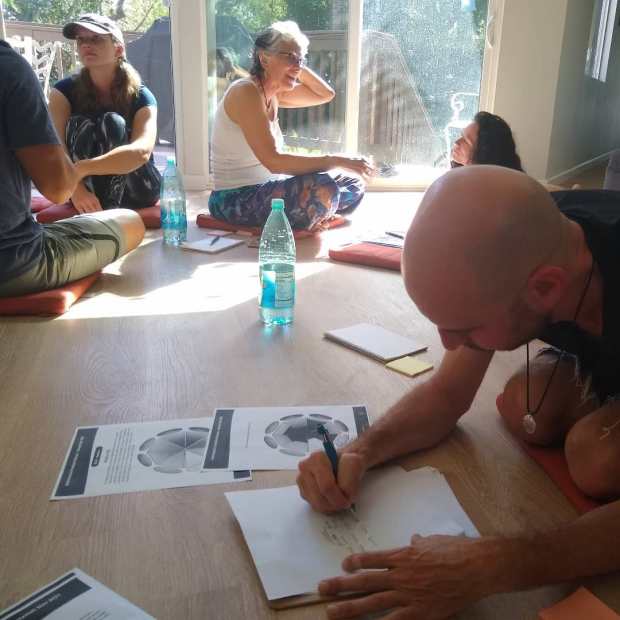
Let’s start with honesty: most workshops fail long before they’re ever run. They fail in the planning stages. My coach Mike told me, “you have to visualize and plan for success.” Fail and fail and fail again. Your failures will help you more clearly define your successes. He told me to think of the workshop as an independent business plan using the business model canvas. Here is one of my early prototype plans, I’ll explain how I failed before I succeeded below.
1. Lack of Clear Goals
Clinicians often have a powerful sense of need but haven’t translated that into concrete outcomes. “I want to run a grief group” is different from “I want participants to leave with three practices for managing grief in daily life.” Without that clarity, the workshop becomes unfocused. When I started the Brush With Grief program, I wanted to do everything for everyone. I wanted to look grief straight in the eye and say, “Okay let’s dance.” But I really wasn’t too aware of the music I was proposing to conduct. I thought I had to cast a very wide net in order to do the work I was proposing. I once heard the phrase, “all things to all people,” and I made that part of my identity. It wasn’t too long before I learned that there is a visceral response to working with death and that this type of workshop is not for everybody. I had to simplify my goal. I had to get real clear that my goal was to help people process grief with a brush making activity I learned about in grad school.

2. Overstuffed Agendas
As helpers, we want to give people everything. We try to pack years of clinical insights into a two-hour session. The result? Participants walk away overwhelmed and under-equipped. In fact, the very first time I did the Brush With Grief program with my, at the time, clinical supervisor, Christine of Humanistic Counselling LLC, a friend who was local artist, and Mike my coach as attendees, I booked four hours’ worth of content into the schedule. No wonder it was so hard getting volunteers to join me for a four-hour time commitment.
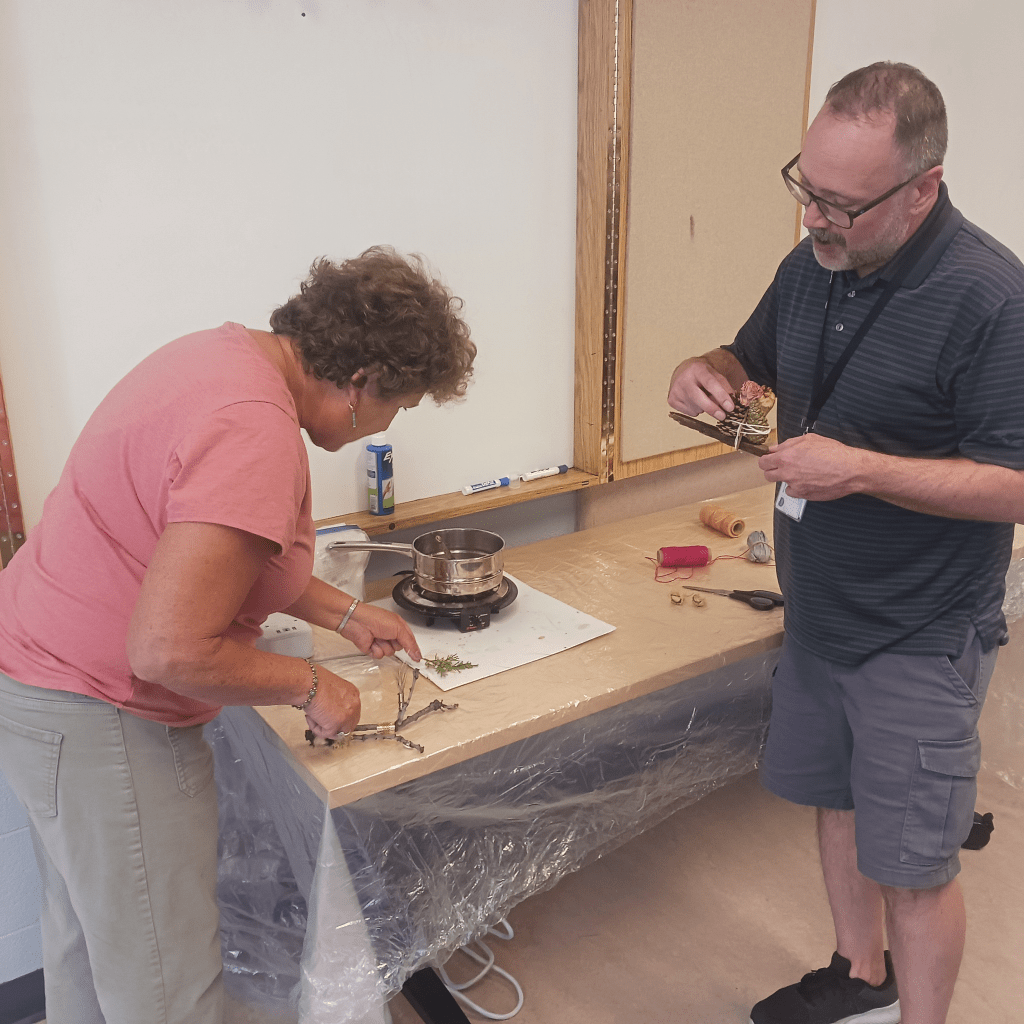
At three hours in, each person had made several brushes. I noted the moments of extended silence, I knew four hours was way to much time for this amount of people and that I needed to cut down the time frame of the brush making activity, I allotted more time than needed. Three hours for three people was still to much time. I honor them by honoring their time. I figured out that for a one-on-one ceremony one hour is perfect. For two or more people, a two-hour program works wonderfully. When there is a meal provided by a sponsor, as was the case on August 30th, 2025 when Boulder County Area Agency On Aging and Michael Chifalo of Rainbow Elders (pictured below) provided one, I need to extend that to two and a half hours.
3. Passive Design
Many workshops become extended lectures. Participants sit, listen, and drift. Adults learn best when engaged — through dialogue, reflection, and practice. There is an arch, a cycle, a set, setting, and scene. You are the actor and the director and the one who can make the most difference with your gifts and wisdom.
I worked with Dr. Itai Ivtzan of the School of Positive Psychology for a Retreat in Hawaii in 2021. During this magical adventure, I learned how to make better use of time. Itai is a wizard of his craft. He has written over fifty books and led dozens of retreats. He has refined his art over decades. I learned from him by looking at his schedule, his private playbook of tools and activities, and asking at least two dozen questions a day. When he led the group, I observed. When he asked me to lead, I followed his style and melded it with my own. I learned how to live with your client. That is to say, we ate, sang, climbed, danced, swam, cried, healed, and spent so much time soaking in the sun and the waves and the Mesmer of Kaʻaʻawa, Hawaii How’s that for stuffing the agenda?
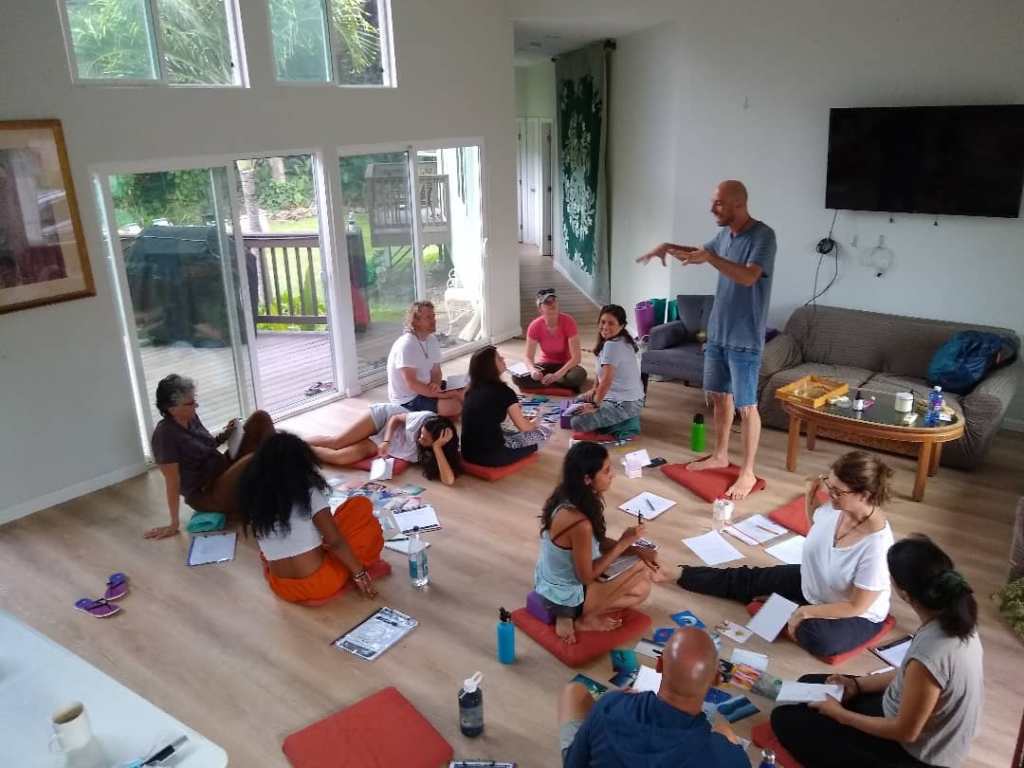
A good retreat does not need to be eight hours of face to face in a row. Break it up. The first meeting in the morning should be after breakfast. Cut the two hours down to ninety minutes. They aren’t going anywhere for a while. Make use of time as an ally. Make use of the history, culture, and richness of flora and fauna. But, did I apply that to the workshops I held…not really, not at first. Legendary dementia guru Teepa Snow said, “Know your agenda but don’t show your agenda.” While she was referring to caring for a person with dementia, the same attitude applies here. You have to break things down and keep it simple.
I was eager to do many things well instead of one thing very well. I know it is a little bit of a semantic game but good design takes time. Over a seven day retreat, you have time to get to know your audience very deeply. Depth should take time. Intimacy should be consensual and mutual and gently orchestrated. You must consider your audience and their capacity for depth. Who is this (activity) for and why are we doing it with them. What stage of the healing process are they in. What about a motivational interviewing model? Are they ready to cry in front of strangers? Are they open to getting messy and dirty when working with the hides and skins and furs of humans and animals? When you design your first retreat, you need to look at it as a series of workshops. Want a good workshop? You need to look at the design. If I take my full agenda and shove it in their face they will be overwhelmed. Simple steps. Simple agenda.
4. Logistical Gaps
Even the most brilliant design collapses if the venue is inaccessible, the materials aren’t ready, or the budget is unrealistic. How do you plan to travel with your workshop materials. In fact, let’s get a little more basic, shall we? What are the materials you will need? How will you procure them? What happens during travel? Are there restrictions when traveling? For example, if I travel with my black bear pelt that was a gift from my Uncle Roy, I still need to carry the papers of registration from over 15 years ago with me to prove that this animal was legally and ethically harvested in Ontario, Canada in partnership with Opimika Wilderness. What do you need to carry out the program at a bare minimum? How will you or your participants arrive? Do they need to fly or drive? How will they know what place to go when booking? How long will it take to set up? Need WiFi or power? Since the BWG group uses rabbit hide glue as the binder, I need a heat and water source to turn the crystals into a glue proper.
What about some in the moment logistics. What happens if you are knee deep in a Power Point presentation and a power outage occurs? How will you communicate to your client’s if you have a flat tire on your drive to the venue? What happens if a client has a mental breakdown? What happens if your group is subject to “Acts of God” or crime? How about something with some iron in it; your client bleeds after an accidental injury with scissors? But, that is just looking at some of the negatives. Consider the logistics of success. How will you celebrate your success. How will this impact a client’s life? How will your efforts ripple into the community. How will you build upon your efforts and lessons learned? What about them expenses…You tracking ’em? What is your Evergreen?
5. No Sustainability Plan
Some clinicians successfully run a one-off workshop but have no pathway to replicate or scale it. Without referral pipelines, retention plans, or follow-up systems, the workshop remains a single bright spark that fades quickly. Trust me, follow up is one of my biggest challenges. I am good at setting the stage and cleaning up afterwards, but I struggle with keeping the momentum going. You must dedicate time to follow up and nurture the relationships you cultivate. For example. It took one year for me to get a paid contract with a local non-profit for my Brush With Grief program. A YEAR of emails, meetings, conversations, answering questions, and planning for success!
The solution is not to perfect everything before you begin. The solution is iteration. Just get out there. Do it. Roll the dice and go with what you have. Again, in another way of saying, craft your minimum viable workshop. You don’t need the perfect workbook, the ideal venue, or a flawless marketing campaign. You need a pilot: clear goals, simple structure, accessible logistics, and willingness to learn as you go. How will you repeat success. For that matter, how will you define success? Why are you doing this workshop? What is your motivation?
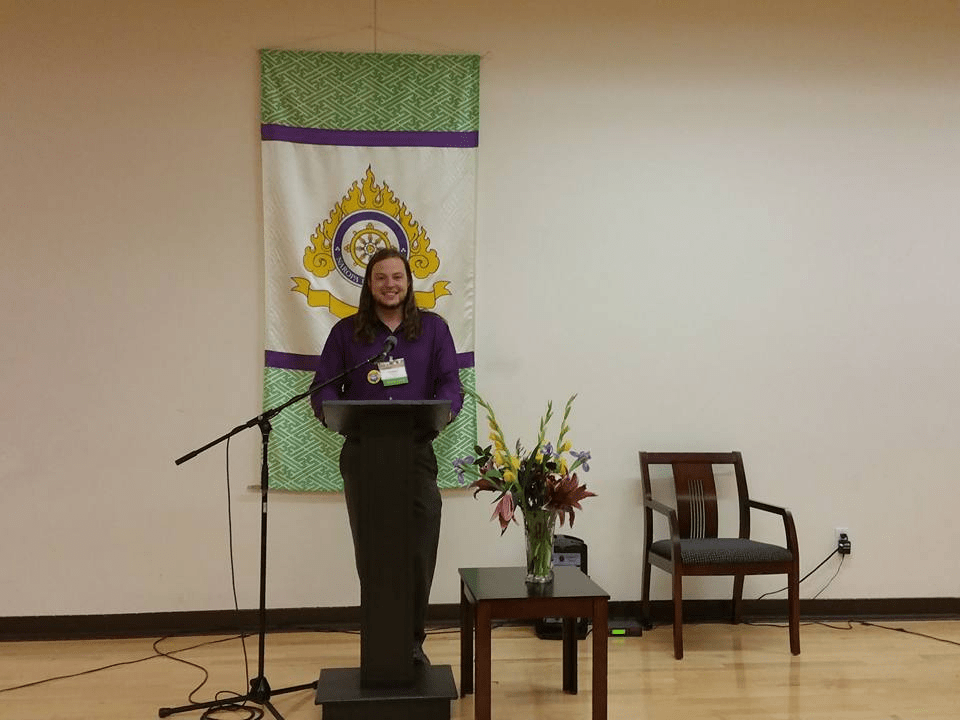
Think of a workshop idea you’ve been holding onto. What excites you about it? Now, write down the single biggest obstacle that has kept you from running it. Explore it deeply. Is this a new or familiar obstacle? When, I do a workshop I keep track of my supplies. How much hide and furs do I have left? I ask myself many questions, because ultimately, the buck stops with me. Where does it stop for you?
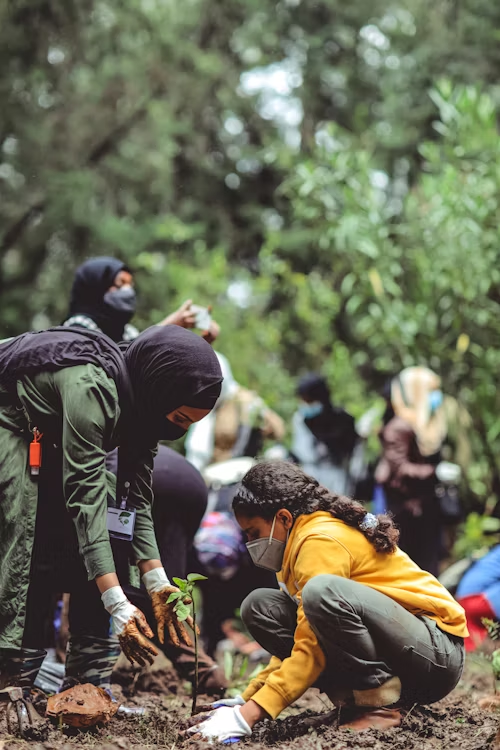
Think about the ripples over time. Consider the working groups that go out into the forest and plant trees. A very clear action that can be observed generation after generation. How about your idea. What will the next generation of counselors, social workers, and psychologists think about you? How will our simple workshop idea transform lives? Dream big.
This is why I now run every idea as a small pilot, then repeat what works.
6. Communication Breakdown: A marketing shortfall
Buckle-up. This is the hard part my friends. At least that has been true for me. When I finally started to understand how I should be advertising Brush With Grief, I put it in the local paper, Facebook groups, LinkedIn, and set up flyers in local taverns, public libraries, coffee shops, and requested to put it in local events listings. I spent money on some of the ads but it wasn’t until I had the traction of a larger organization’s social media presence to give me a much needed boost in my advertising. They had a larger budget and a dedicated staff member to craft a perfect flyer for the summer series. So, I shared that and rode of the waves of interaction. I still had to craft my own Eventbrite links for each of my events. In fact, in 2025 I hosted eight free programs at libraries in Boulder County, Colorado, USA. I had one person attend. So, that was seven times, I booked, email and social media blasted, showed up, and wrestled with the space that was all to myself. By the fourth silent event, I felt distraught and confused. Then, bookings began to happen. Donations came in. Partners shared their excitement and requested more events. I kept the faith, I showed up. I was dedicated. I am dedicated.
I learned that with marketing, you just have to keep on it. A little bit every week goes a long way. Sometimes you need to simplify things. For example, I try to only list upcoming events on my websites and keep a separate webpage for all the past events. When I do use an Eventbrite link, I try to primarily share my landing page that shows all upcoming and previous events. However, when working with a partner, it still helps to have a dedicated event link so their audience doesn’t get lost and book the wrong event. Over time, you watch the list fill, participants see that you have held a dozen workshops and they missed every single one and now your next event lines up perfectly for them.
7. Good Vs Bad Flyer
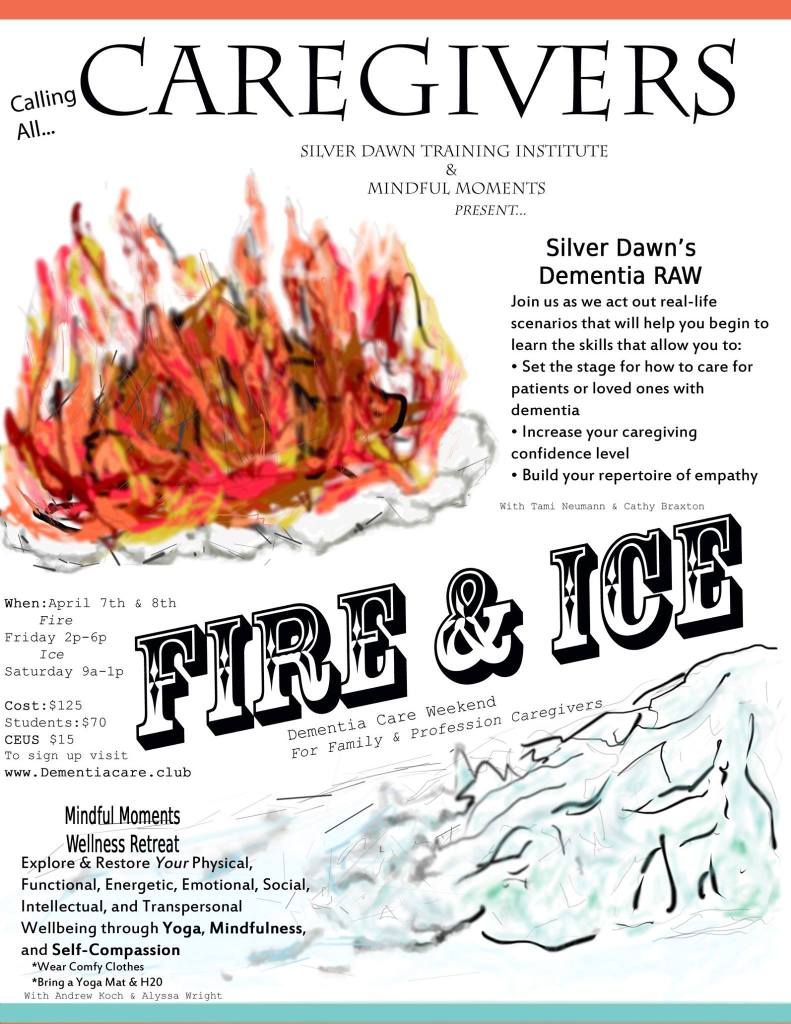
Okay, let’s take a brief example of a good and bad flyer. If you haven’t figured out my style by now…I worked on the “bad” flyer and my partners with Silver Dawn, now Improv4Caregivers, created the “good” flyer. This was a brutal lesson for me. I had really no context and experience in making a flyer. My advice is to go to a place with a lot of the flyers and find out who is the most clearly articulated and visually striking. Next, watch some videos on youtube on how to create flyers on Canva.
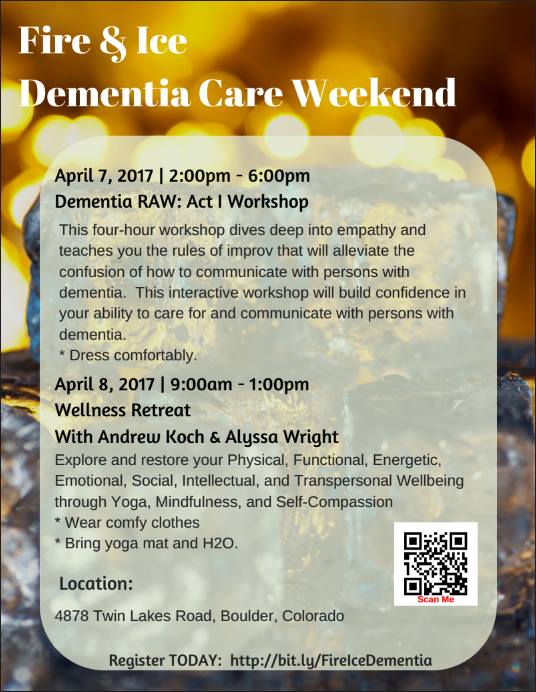
The good “Fire & Ice Dementia Care Weekend” flyer
Why it works better:
- Clear title and event identity at the top.
- Dates/times are scannable and grouped by day.
- There’s at least one obvious CTA (QR + short link).
- Location appears once, in a standard place.
What to tighten:
- Too much body text; the long paragraph under “Dementia RAW” reads like a program description, not a flyer. Convert to three outcome-oriented bullets.
- Benefits vs. logistics are mixed together. Separate into “You’ll learn/leave with” and a small logistics box (When, Where, Duration, Cost).
- Add “Audience” (“Family & Professional Caregivers”) and a brief accessibility note.
- Increase contrast within the gray overlay and trim line length for legibility.
The cautionary example (the illustrated “FIRE & ICE” poster
What undermines it:
- Visual chaos and weak hierarchy: too many fonts, angles, and competing focal points.
- Multiple micro-sections and scattered logistics make the reading path unclear.
- “Calling All CAREGIVERS” and the huge “FIRE & ICE” lock up space without conveying outcomes.
- Several quasi-CTAs (site, cost, CEUs) compete; there isn’t one dominant “Register” action.
- Low contrast in places and dense copy blocks reduce arm’s-length readability.
How to salvage it:
- Keep one expressive image (flame/ice) but reduce to a single header band + one hero visual.
- Two fonts max; straight baselines; strong contrast.
- Tighten to: headline, one-sentence subhead, three benefit bullets, logistics box, one CTA.
With that cleaner flyer in hand, I tested it at Boulder Pride.
8. Be Courageous
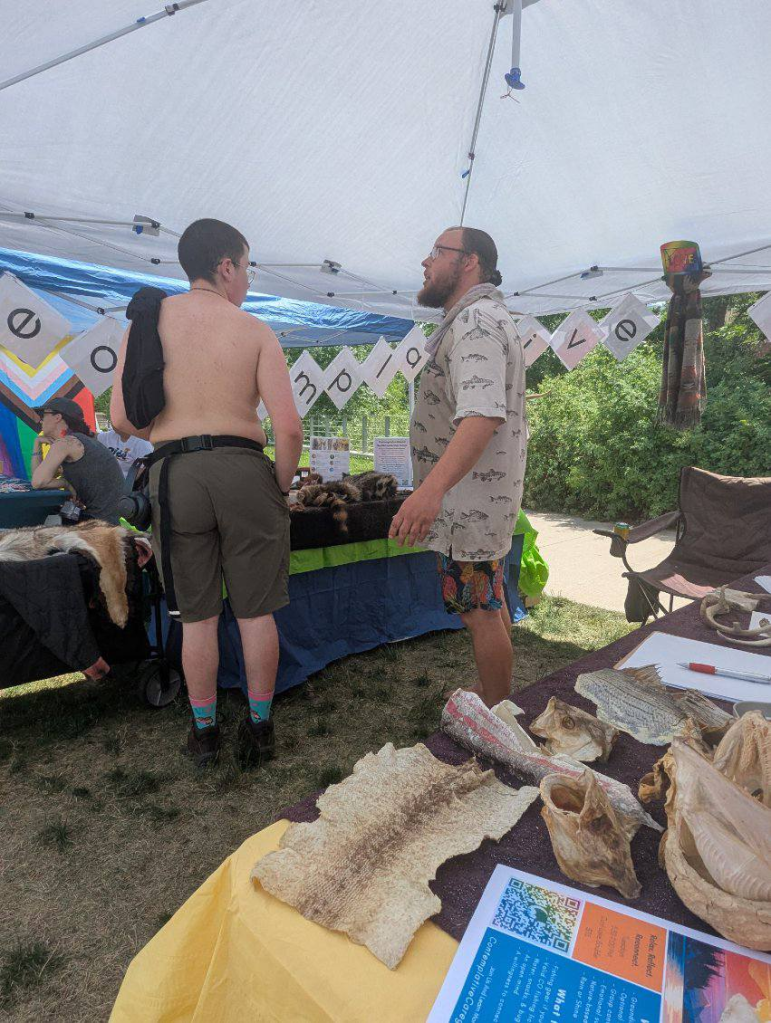
Keeping track of your commitments and marketing helps people see your integrity as a clinician. This summer at Boulder, Colorado’s Pride Festival hosted by Rocky Mountain Equality, I showed up in the heat of a 97 degree cloudless day beside the Boulder Creek. Set up with over a hundred other vendors, I spoke to, gestured at, invited, and handed out flyers to over four hundred people. At one point I soaked myself in the creek! People wanted to know all about why I had animal hides on a table. They pet, laughed, jumped, showed disgust, and awe. The hundreds who gave Contemplative Caregiver’s booth a chance was what really let me know that my idea of working directly with death is what the LGBTQIA+ community needed. But that is my method and madness. How do you want to communicate to the communities that matter to you?
Making A Workshop as Clinical Practice and Business Model For Counselors, Social Workers, and Psychologists
Many clinicians hesitate to see themselves as entrepreneurs. But workshops demand that shift. You are going out on a limb to provide an enriching experience for your attendees. How will you frame it? Let’s break it down into two parts. 1. Clinical 2. Business.
Clinical Extension
Workshops are one of the most versatile tools in a clinician’s repertoire. They bridge the gap between therapy and community education, giving counselors, social workers, and psychologists, a platform to offer something that is both structured and approachable. In a workshop setting, psychoeducation can come alive. For example, a therapist trained in cognitive-behavioral therapy might design a session where participants learn to identify and challenge distorted thinking patterns, not in a clinical one-to-one format, but in a safe, group-based environment where exercises, case examples, and guided reflection allow everyone to practice together. Think about the most simple and easy to access tool or exercise that you feel has the most impact. Use and build on that.
Workshops also create supportive spaces where people feel less isolated in their struggles. A social worker facilitating a caregiver group can use the workshop format to combine shared storytelling with structured coping strategies. The experience is powerful because participants see their challenges reflected in others and feel validated in ways individual therapy sometimes cannot achieve. Similarly, postpartum support workshops can normalize experiences of exhaustion, shifting identity, or emotional overwhelm. What begins as psychoeducation becomes collective healing — a reminder that many challenges are shared, not individual failures.
Historically, some of the most widely known self-help and leadership movements began as workshops rather than academic courses. Stephen Covey’s 7 Habits of Highly Effective People was not only a bestselling book but also a workshop series that gave participants tools to practice habits in real time with others. In the mental health field, mindfulness-based stress reduction (MBSR), originally developed by Jon Kabat-Zinn, gained traction not just through research but through workshops that allowed participants to practice together over eight weeks. Workshops extend knowledge beyond the walls of a consulting room and into lived, embodied experience. They take abstract theory and give it a form that is communal, practical, and transformative. Check out these two snippets of both Covey and Kabat-Zinn’s work.
THE 7 HABITS OF HIGHLY EFFECTIVE PEOPLE BY STEPHEN COVEY – ANIMATED BOOK SUMMARY
Mindfulness – An introduction with Jon Kabat-Zinn
The first workshop series I did at East Wind Studios in Chesterton, Indiana was “Educate & Meditate” based on what I have called the “Mindful Moments Wellness Wheel” over eight weeks I introduced mindfulness and meditation and each subsequent week we would check in and then practice a different style of meditation. When you have a clear goal for one workshop you can expand it into a series. Here is an example of the model as it developed during graduate school at Naropa.

Business Development
From a business perspective, workshops are not side projects or “extras.” They can be an integral or even a central part of a sustainable practice. A single workshop can serve as an accessible entry point for people who are not yet ready to commit to therapy. Someone may hesitate to book a $150 session but feel comfortable paying $25 for a two-hour group. Workshops are the first step that introduces them to your presence, your approach, and your trustworthiness. When they are ready for deeper work, they are more likely to turn to you because they already know you. Word of mouth travels fast and a testimonial can help seal the deal in a cycle of perennial marketing. Besides, it is clinically sound to not have therapy client’s give testimonials, so save that for your workshops!
Revenue is another essential dimension. Workshops can be monetized directly through ticket sales, but also indirectly through contracts and grants. Agencies frequently look for external professionals to provide in-service trainings for staff. Schools and nonprofits often have funds set aside for wellness programming and inservice trainings. A well-positioned workshop, with clear outcomes and professional credibility, can attract this kind of institutional support. In fact, Covey’s model thrived largely because organizations saw the value of training their teams and were willing to fund it. Mental health professionals who design thoughtful workshops can tap into similar streams of institutional funding. Brush With Grief is funded through donations and partner programs with organizations like Medicine Horse and The Natural Funeral.
Beyond income, workshops position you as a thought leader. Running a grief workshop in collaboration with a nursing home, a parenting workshop in partnership with a school district, or a resilience workshop through a hospital wellness program creates visibility in spaces where your expertise is both needed and respected. Each event builds your reputation as someone who not only provides therapy but also shapes conversations about mental health in the wider community. Over time, this credibility compounds. Your name becomes associated with a particular specialty or approach, much like Covey’s became synonymous with personal effectiveness, or Brené Brown’s research workshops became tied to vulnerability and courage.

Community partnerships grow naturally through workshops. When you consistently offer meaningful programs, aligned organizations begin to see you as a collaborator. A psychologist who starts by offering a single workshop on adolescent stress may find themselves invited back annually by schools, asked to keynote at conferences, or approached by nonprofits to co-design programs. Workshops open doors that individual therapy never could, because they show your capacity to lead, educate, and engage groups. And may act as a direct transition for individual consultations. What started as a single workshop can become both a marketing funnel and a revenue stream.
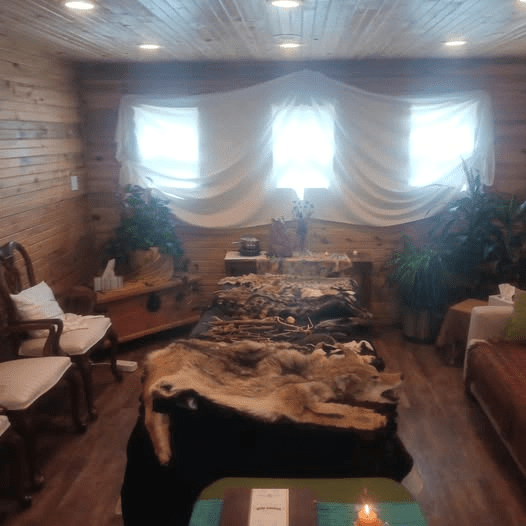
The Four Leaves of the Workshop Lucky Clover
Okay so maybe CEUs aren’t for you. That’s okay. Let’s use the model we explore in supervision and in the Clinical Mental Health Leadership Group check-ins. Personal, Professional, Administrative, and Theoretical. This is the same model we use all year long so let’s apply it to workshop development.
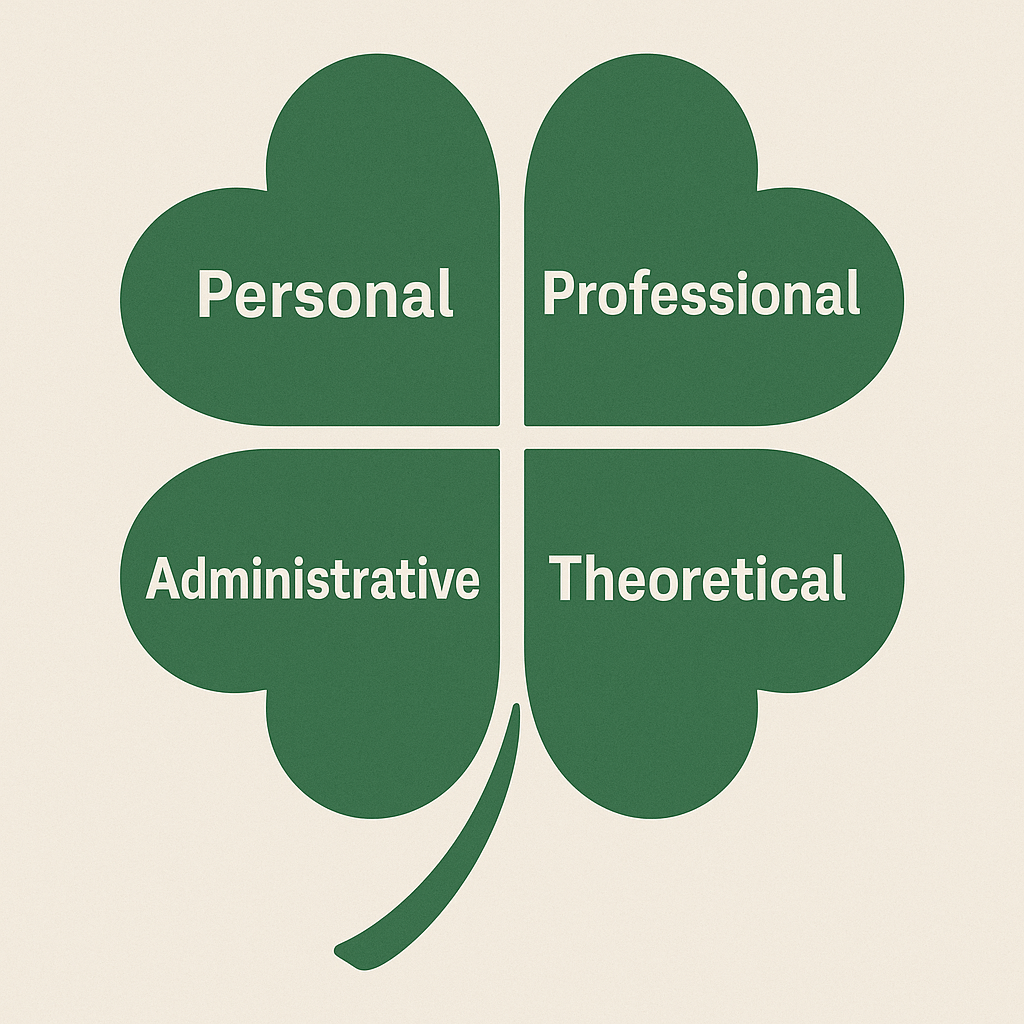
Personal Preparation: Stepping Into the Role of Facilitator
Facilitating a workshop is a different skillset than conducting therapy. In therapy, we often attune to a single person’s moment-to-moment needs. In a workshop, you are guiding a group with varied experiences, personalities, and expectations. That shift requires you to prepare not only your content, but yourself.
Start with clarity of purpose. Write down three specific outcomes you want participants to achieve, and let those outcomes shape your design. If you hope to build confidence in coping skills, your agenda must include practice, not just lecture. If your goal is community connection, carve out time for interaction and sharing.
Think about who you’re designing for. Are your participants clinicians seeking new tools, caregivers depleted from daily responsibilities, teenagers exploring identity, or parents searching for guidance? Each audience brings its own hopes and challenges, which will shape not just your content but also your tone, your examples, and how you facilitate.
Finally, take stock of yourself. List three strengths you can rely on — empathy, adaptability, humor, presence. Then name three growth edges — time management, redirecting strong voices, or public-speaking nerves. Acknowledging both strengths and edges helps you plan strategies in advance and step into facilitation with honesty and confidence.
Reflection Prompt: Complete this sentence — “I want to create a workshop that helps [audience] achieve [goal] by using [method].” Here are some examples:
- “I want to create a workshop that helps caregivers reduce stress by using guided mindfulness and art-based reflection.”
- “I want to create a workshop that helps high school students strengthen peer communication by using role-play and group dialogue.”
- “I want to create a workshop that helps new supervisors build leadership confidence by using case studies and structured feedback.”
- “I want to create a workshop that helps individuals living with grief find creative expression by using brushmaking and storytelling.”
- “I want to create a workshop that helps nurses improve emotional resilience by using grounding exercises and resilience mapping.”
- “I want to create a workshop that helps family caregivers enhance home safety by using interactive demonstrations and practical checklists.”
- “I want to create a workshop that helps LGBTQIA+ youth explore identity safely by using journaling prompts and peer-sharing circles.”
- “I want to create a workshop that helps community leaders strengthen collaboration by using systems mapping and small-group strategy sessions.”
- “I want to create a workshop that helps trauma survivors cultivate self-compassion by using guided imagery and body-based awareness practices.”
- “I want to create a workshop that helps graduate counseling students practice ethical decision-making by using real-world scenarios and guided debates.”

Professional Preparation: Executing With Intention
Once your personal grounding is clear, structure brings your vision to life.
Begin with a detailed outline. A timed agenda is your anchor, offering both direction and flexibility. Without one, workshops drift; with one, you can track the flow and still make space for the unexpected.
Design activities that match your goals. Small-group discussions build dialogue, role-plays allow experiential practice, and case studies make theory tangible. Remember: participants learn more by doing than by simply listening.
Close the loop with feedback. Evaluation forms are not just paperwork — they sharpen your skills and provide accountability to participants, agencies, and accrediting bodies. Collecting feedback is part of professional practice, not an afterthought.
This Activity Bank is just a starting point — use it as inspiration and begin building your own personal bank of engagement activities that reflect your style, strengths, and the unique needs of your participants
Administrative Backbone: The Invisible Work
The seamless workshop participants experience depends on invisible preparation behind the scenes.
Start with a realistic budget. For pilot workshops, aim to stay under $100 — enough to cover venue, basic materials, light refreshments, and digital promotion. Think creatively about resources: libraries, nonprofits, and schools often provide free or low-cost spaces.
Select your venue with care. A dim, noisy room can undercut even the most thoughtful design. Choose spaces that are accessible, comfortable, and aligned with your goals.
Approach marketing as an ecosystem. Different audiences live in different spaces. Clinicians may find you through LinkedIn or CEU directories. Caregivers may notice a flyer at a library or senior center. Agencies and schools may invite you back if your workshop demonstrates clear value. Lasting outreach comes from weaving together multiple channels into one coherent strategy.
There is a lot to think about. So check out this Workshop Logistics Checklist to help you better prepare on paper instead of all in your head.
Grounding in Theory: Building Credibility
Workshops for professionals — especially those offering CEUs — require grounding in theory. Even community-based groups benefit when participants sense that your design is rooted in evidence.
Kolb’s Experiential Learning Cycle reminds us that adults learn best through doing. Plan for all four stages — experience, reflection, conceptualization, and application — within your agenda.
Tuckman’s Stages of Group Development highlight that forming, storming, norming, and performing are natural. Early hesitation or conflict is not failure but part of the process. When you anticipate these stages, you can guide participants toward cohesion.
Self-Determination Theory underscores that motivation thrives with autonomy, competence, and connection. In practice, this means offering choice in activities, designing exercises where participants can succeed, and creating moments of genuine connection.
Clinical Example: In one group, participants hesitated to speak. Recognizing this as Tuckman’s “norming/storming” stage, I shifted to paired sharing rather than large-group discussion. Slowly, trust deepened, and by the end participants engaged openly.
Reflection Prompt: Which theory resonates most with your style? How can you design your workshop to embody its principles?

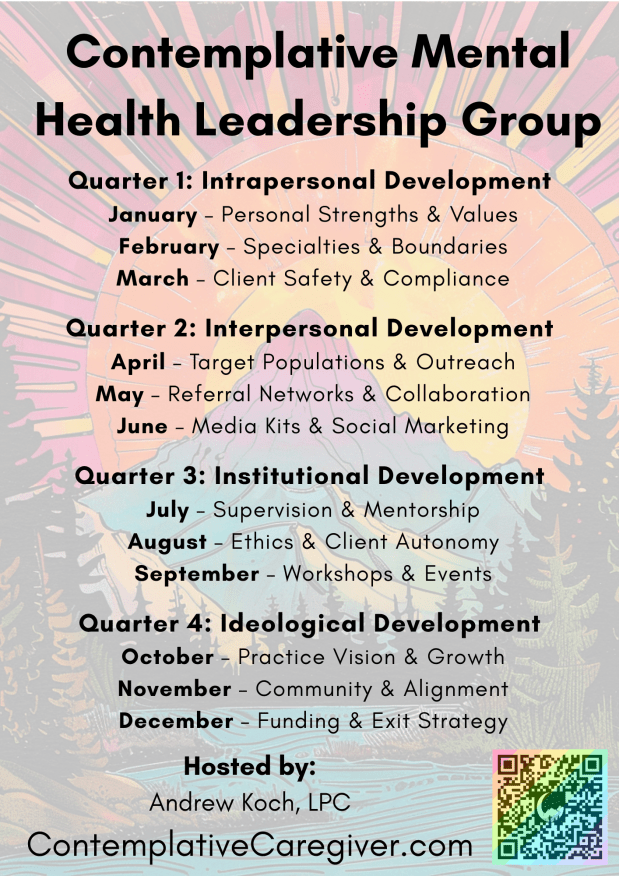
Upcoming Clinical Mental Health Leadership Group Sessions
September 11 – Session 1: Planning and Structuring Effective Workshops
Guest: Mike Lyons – SCORE Co-Chair of Workshops and Public Events
Mike brings extensive experience in product development, software management, HR and recruiting, customer relations, and project leadership. He will share actionable strategies for designing, structuring, and promoting effective workshops and trainings that meet both organizational and client needs.
September 25 – Session 2: Developing and Organizing Large Events (e.g., Galas)
We’ll cover logistics, promotion, budgeting, and partnerships involved in creating larger-scale community events that are impactful and sustainable.
Join a community of mental health professionals for peer support, shared insight, and business-building strategy. Open to students, provisionally licensed, and fully licensed therapists practicing in Colorado. Send me a blurb about yourself and your goals and we’ll be happy to send you invite link to the group.
Conclusion: The Leader’s Reflection
A workshop is not a one-time performance. It’s a living practice — evolving each time you run it. With each cycle, you refine your goals, strengthen your logistics, and deepen your facilitation.
For clinicians, workshops are more than events. They are bridges: between therapy and community, between professional growth and business sustainability, between the needs we see in our client’s and the larger systems we hope to serve.
So dust off the idea you’ve been holding. Pilot it. Learn from it. And let it grow.
This September, be ready to bring your workshop into the world.
 Contemplative Caregiver